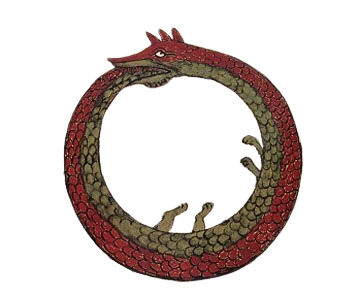
Protesting too much: the debate about AI art vindicates it as art
The outrage over AI art is the repetition of an old cycle.
People despise AI art
People despise AI art. Like, really hate it. Polling data is predictably terrible, but Scientific American reports that 62% of Americans say they would like their favorite piece of art less if they learned it was AI generated. It's not just the public, these are some quotes from artists and art critics on AI art:
- "A house of cards and hall of mirrors" and "momentary diverting gimmick art" from Jerry Saltz at Vulture
- "The soporific consistency… is a conveniently perfect illustration of how little we learn from these superhuman brains…what we generally get from all of this information is aesthetically consistent and conceptually thin." — R.H. Lossin at e-flux
- "I strongly feel that this is an insult to life itself" — Hayao Miyazaki
So AI art is both a conceptually thin trend and an insult to life. Soporific yet also diverting. So we're not exactly sure why, but we don't fucking like it. We don't think it is art, we think it has less value than other art, and learning that art was made with AI makes us like the art less. Why are we protesting so much?
There are some good reasons to be concerned about the broader technology (theft, disinformation, economic wreckage, to name a few), but our outrage about specifically AI art is, in my opinion, the repetition of an old cycle.
Noticing the cycle
In the outrage over AI, an old pattern unfolds itself again. An observation: art movements and mediums and styles that ignite passion in human hearts end up being written into the human canon.
This shouldn't surprise us. The art movements that have enough life to produce debate are the same that have enough life to stick around. The art that challenges our norms and beliefs is the art that matters.
We've had this conversation before.Examples in mediums and styles
Only an impression, nothing else
Impressionism is so popular and ubiquitous it is passé to publicly reflect on the movement. I'm not being sensitive here. It is trivial to find public figures making my point: "... it's hard not to cringe when you see… coffee-table books about Impressionist dogs" says the professor of art history. Even more generous evaluations can come across as patronizing; "[we] might not be as familiar with say, the religious iconography of 17th century Italian baroque painting, but everyone knows what it is like to be outside on a beautiful day" says the museum curator.
My point isn't that impressionism is bad (it is not) or that you're stupid for liking Water Lilies (you are not). The point is that the once revolutionary impressionists have been rendered anodyne by time. Everyone recognizes impressionism, unambiguously, as art.
But not so at the start. Remember that the term "impressionism" was intended as a slight. A critic sliced the moniker from the title of one of Monet's works ("impression, sunrise") and used it to dismiss the movement on the whole:
"Impression—I was certain of it. I was just telling myself that, since I was impressed, there had to be some impression in it ... and what freedom, what ease of workmanship! Wallpaper in its embryonic state is more finished than that seascape."
That would not be the only critique leveled at impressionism as it took shape in the Salon des Refusés. Its unrealism troubled other critics who wanted to "...try to make Monsieur Pissarro understand that trees are not purple, that the sky is not the colour of fresh butter, and that in no country on earth will you find the things he paints." Whether due to the lack of workmanship or the failure of representation, Impressionism was initially dismissed, and is now ubiquitous.
Representational, but not too representational
Impressionism isn't the only art movement dismissed for its non-representational stylings. The same line of reasoning would be leveled at the abstract expressionists nearly 100 years later (and still to this day). Who hasn't winced on hearing the refrain "my 8-year-old could have done this!" in reference to a Rothko painting that required breathtaking pains to produce?
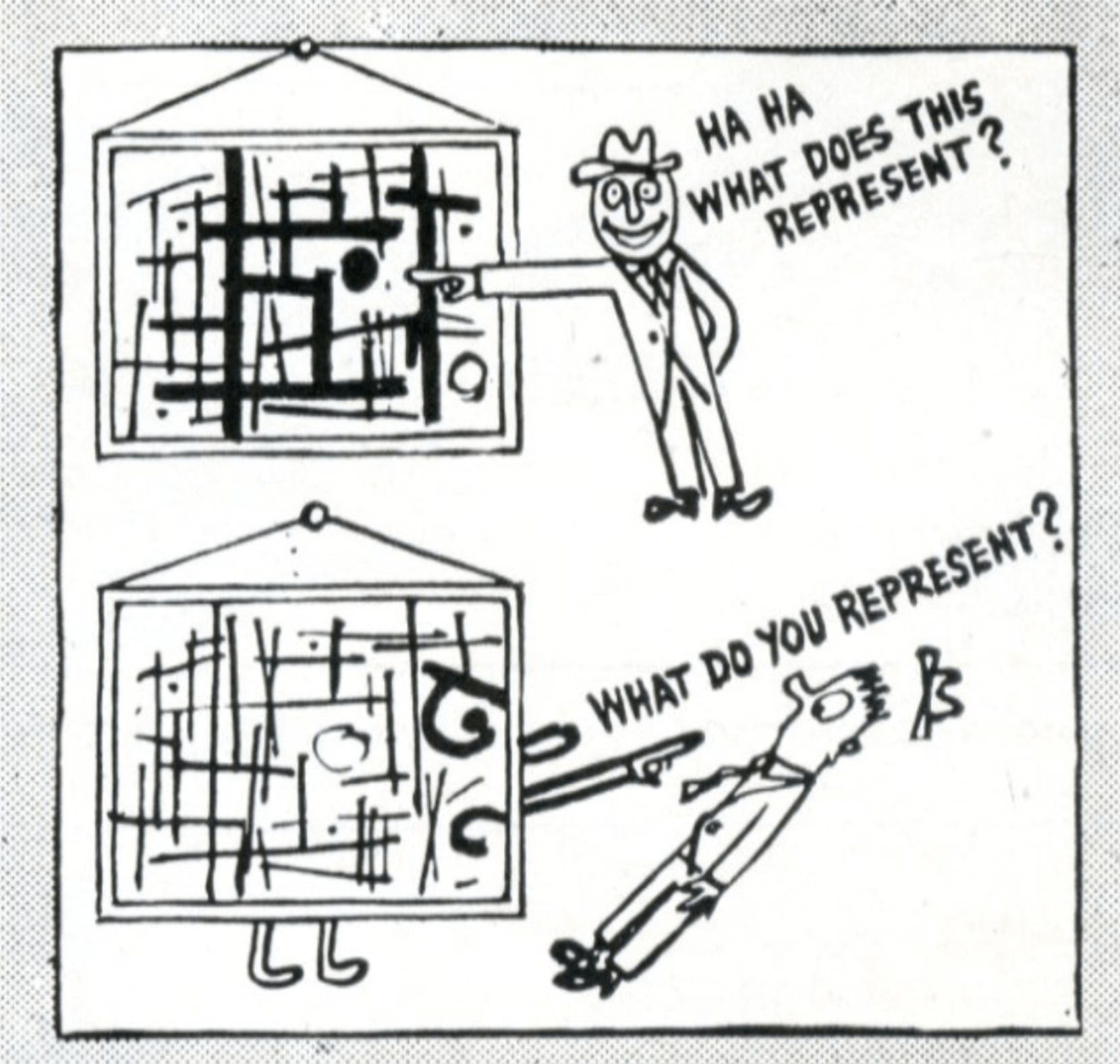
Hilariously, the exact inverse of the criteria of representation was employed against photography on its invention as an artistic tool:
"All labor of love must have something beyond mere mechanism at the bottom of it. It is necessary for the artist in his [studies] to do much work that may appear to some persons like merely mechanical copying of nature; but it never is such in the hands of an artist of true feeling. The technical qualities of a work of art are superior to those of a photograph…"
Dorothea Lange was born just 30 years after those words were penned. Alfred Stieglitz a year before. The critiques of photography as too mechanical or too representational to be art were rendered ludicrous by time's passing — same as the critiques of impressionism's unrealism.
Is history rhyming for anyone else?
I want you to re-read the quotes about impressionism and photography above. Go on. Now, read the following quote about AI art:
"AI-generated art has a specific 'look' to it… As time goes on, users will become more attuned to it and start to turn away from it because of its inauthenticity and 'cheapness'."
Do you hear how these things rhyme? Do we really want to repeat this old refrain? Can we even help ourselves?
That's really it. Great divisiveness often precedes acceptance and normalization in the arts. The fervor we're all feeling betrays the scale of the impact that generative art will have.
Conclusion: the hatred is the tell
I don't think there is an argument for dismissing LLMs as tools or as a medium for producing art. LLMs are flexible enough that they're nearly certain to play a part in artistic expression moving forward. If not directly, then indirectly through the other tools we use for art. Additionally, I think the passion with which we regard these new tools reflects their power to shape the world. I think most folks already know (fear?) this already, and we're protesting too much.
New movements in art are initially dismissed, then become ubiquitous, and AI art has already started to be accepted as a medium. In the future, people will use LLMs to create pictures of themselves as Minions. They will also make masterpieces.
We're in the cycle againAppendix
Common arguments and their rebuttals
- "There is no intention on the part of the artist!"
- Prompting and hyperparameter tuning and the systems used for input and the technological infrastructure and the models used and the composition of outputs are all intention.
- This is like saying that photography has no intention because you're just capturing an existing physical scene. But the photographer chooses which scene, at the very least, and moreover chooses the framing, exposure, iso, and so on. Beware hidden skill, intention, and effort.
- "There is no skill on the part of the artist!"
- This ignores the many ways skills can hide in the mechanics, just as it does in photography.
- Insisting that art be "difficult" is a strange move. Why does it have to be? Wouldn't it actually be miraculous if we had a tool that could let each human express their artistic vision without the 1000s of hours of mastery otherwise required?
- "It's all stolen!"
- True. Laying aside obvious rhetorical outs like Picasso's "great artists steal," this kind of stealing feels and is bad. We should have a better way of training and deploying these models.
- In a world where humanity's orientation was human flourishing instead of profit, we might expect contributions to the training data and collective LLM to be reimbursed (maybe contributing to a UBI?)
- In our world, this probably just means the boot of some massive, sadistic tech company on the face of independent artists
- And truly, that's awful, but does it invalidate the output as art?
- If the art produced via LLM is sufficiently like another artist's work, then it is plagiarism. But that's also possible with physical mediums.
- If the art is sufficiently unlike the other artist's work, then isn't it quite a bit like inspiration?
- On the topic of unethical tools, paintbrushes are sourced from the fur of animals and paint requires cadmium mining. We still make art with these tools.
- bone of foe dipped in blood of mammoth // fur of an animal killed and skinned in a factory dipped in the sweat blood of slave labor // both brushes told stories
- And truly, that's awful, but does it invalidate the output as art?