
A pound of Norse flesh? Tracking down a rare motif.
Noticing similar motifs in unrelated works
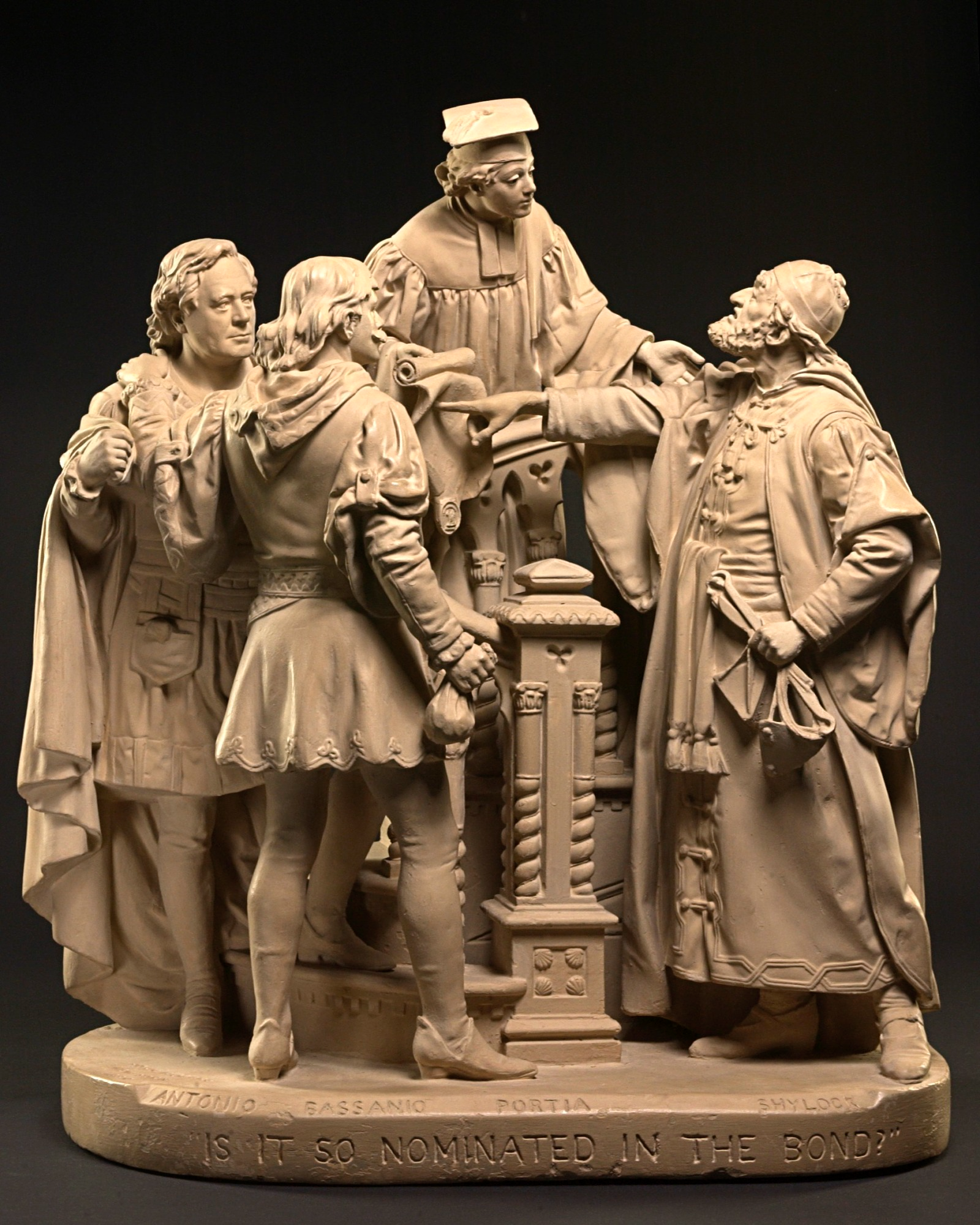
A Norse trickster god and a Venetian merchant walk into a courtroom. Both are facing death and both escape their sentence on the same, hyperspecific technicality. Surely these cases are related?
While reading the Merchant of Venice recently, I noticed a similarity to a Norse myth sometimes referred to as "Loki's wager." Check out the passages and see if you notice the same thing:
From the Folger Shakespeare library — The Merchant of Venice, Act 4, scene 1:
Tarry a little. There is something else.
This bond doth give thee here no jot of blood.
The words expressly are "a pound of flesh."
Take then thy bond, take thou thy pound of flesh,
But in the cutting it, if thou dost shed
One drop of Christian blood, thy lands and goods
Are by the laws of Venice confiscate
Unto the state of Venice.
From the Prose Edda, Skáldskaparmál XXXV:
Then Loki offered to redeem his head, but the dwarf said that there was no chance of this. 'Take me, then,' quoth Loki; but when Brokkr would have laid hands on him, he was a long way off. Loki had with him those shoes with which he ran through air and over water. Then the dwarf prayed Thor to catch him, and Thor did so. Then the dwarf would have hewn off his head; but Loki said that he might have the head, but not the neck.
In fairness, escaping legal consequences through loopholes is a common folklore motif. But the structure in those passages feels more unique than that. For starters, both stories have body parts on the line. Further, both stories incorporate the body into a defense by anatomical impossibility (cut without blood, beheading without neck). The defense invites the contract to be fulfilled, but points out it can't be without violating an unstated but necessary condition.
What I wanted to understand is whether it is at all possible that Shakespeare would have been familiar with or even have referenced the Norse myth in Portia's defense of Antonio.
Emailing the Shakespeare museum
I emailed the Folger Shakespeare Library with this question and heard back from a Library Associate who had a few key clarifications:
- Merchant is generally considered to be inspired by an Italian story, Il Pecorone, written by Giovanni Fiorentino in 1378
- I was able to track down an English PDF of the story and can confirm that Il Pecorone uses the same legal escape, promising punishment if more or less than a pound is taken, or if a drop of blood is spilled besides
- The library isn't aware of claims that there's a direct link from Prose Edda to Merchant, but doesn't rule it out.
- They also mentioned that Hamlet has Norse roots
- These points are a bit moot now that we know the same clever defense was in Fiorentino's story 200 years before Merchant was penned.
Folklore indices
Folklorists study story patterns and build databases of the motifs used in stories around the world. I thought the "body part loophole" trick might be represented in one of these indices, and found it listed as motif J1161.2 — "Pound of flesh":
"Literal pleading frees man from pound of flesh contract. Contract does not give the right to shed blood. Impossible, therefore, to carry out."
Which is a perfect match for our motif, as the name might have suggested. More interestingly, the entry also references the motif's appearance in Icelandic and Italian traditions. Maybe Fiorentino was influenced by Loki's story, not Shakespeare!
I tried to track down those specific indices to see what else they said, but Boberg's Motif-Index of Early Icelandic Literature isn't easy to access online, and the scholarly articles that might explain the transmission are locked behind paywalls or sitting in university libraries. The exact relationship between these versions remains unclear to me.
I also searched for trickster tales across cultures and found heaps of examples: Anansi in West Africa, Coyote in Native American traditions, the Hare in Bantu folklore, shapeshifting foxes in Asian mythology. Lots of clever lawyers too, as well as legal loopholes. But I didn't find the same body-part-impossibility trick anywhere else. The Thompson Motif-Index is a massive six-volume catalogue of folklore elements, but the entry for "Pound of flesh" only cites these same Icelandic and Italian traditions.
The persistent mystery of transmission
Now we know that this motif traveled from Iceland in ~1220 to Italy in 1378, not to England by 1596 as previously thought. The mystery is how. And where else does it appear? And if nowhere else, why?
Another point worth further investigation is this motif's distinctive highlighting of the human body's integrated nature. You can't take a head without touching the neck. You can't cut flesh without spilling blood. The "mistake" in the contracts is the treatment of the body as separable, like property might be. What might this structure tell us about the minds who invented it?
This investigation put me in contact with a research library, taught me about the inspiration for Merchant of Venice and folklore indices, and left me with few conclusions and a host of new questions. As it should be.
If you have knowledge of the transmission of folklore between Icelandic and Italian cultures between 1200–1400, I would love to hear from you!